
375 North Main Street Suite A-5
Williamstown NJ 08094
(856) 226-9524
mike@pinkharbor.com
Mon - Fri 9 AM - 5 PM
Nights & Weekends
during tax season
Williamstown NJ 08094
mike@pinkharbor.com
Nights & Weekends
during tax season
Receiving an IRS levy can put your wages, bank accounts, and other property at risk, but you may still have options to stop the collection action or secure an IRS levy release. Pink Harbor, CPA can communicate with the IRS on your behalf, determine why the levy was issued, evaluate available tax-resolution options, and help you take the appropriate steps to protect your finances. Acting quickly is important—especially if you have received a Final Notice of Intent to Levy or the IRS has already contacted your employer or bank.

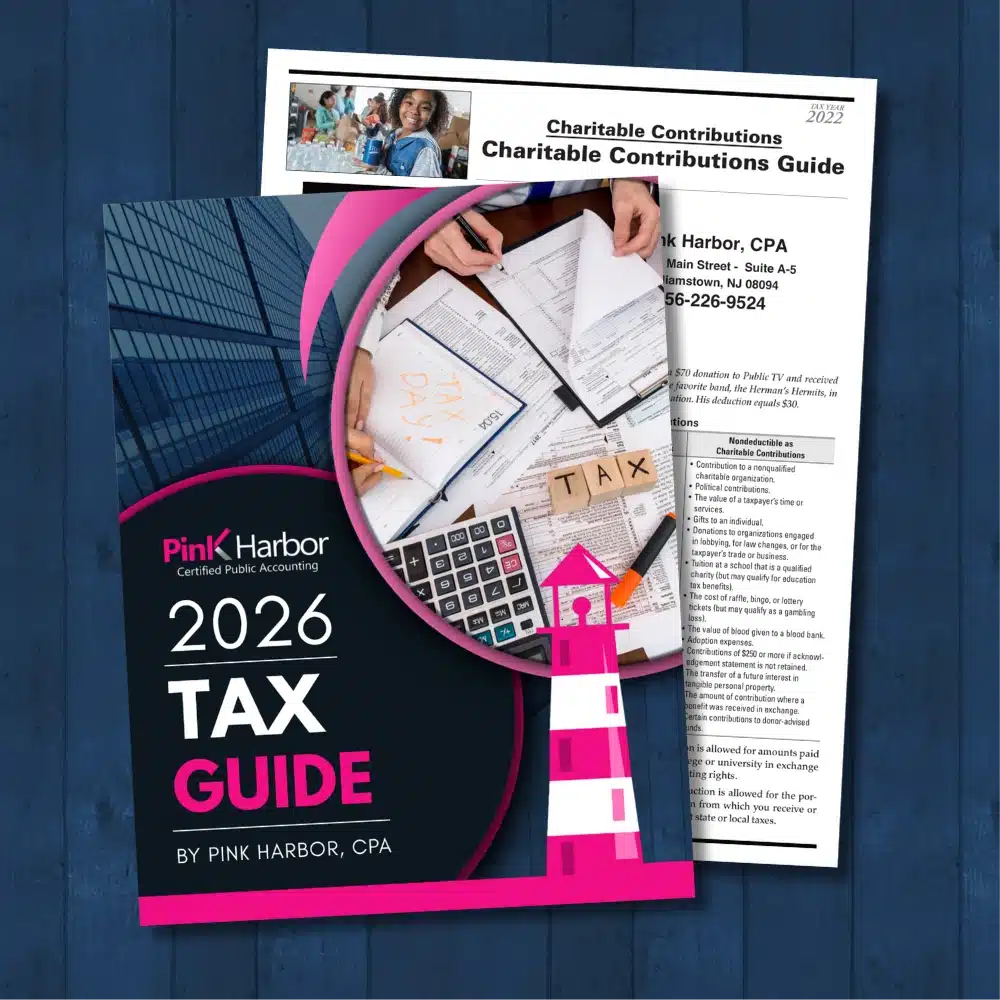
Explore comprehensive tax guides covering hundreds of topics from tax years 2021 through 2026. Designed for individuals, businesses, and nonprofits, these resources help you understand tax laws, deductions, credits, and planning opportunities—so you can make informed decisions with confidence.
An IRS levy allows the IRS to seize your property, vehicle, wages, or bank accounts to collect unpaid taxes. It’s stressful, but you don’t have to face it alone.
Whether you need to stop an IRS levy, handle an IRS wage garnishment, or resolve an IRS levy on a bank account, Pink Harbor, CPA, can help you find the solution fast.
We specialize in securing an IRS tax levy release and protecting your financial future.
Don’t wait—contact us today to take action and regain control of your assets!
CP504 A Notice of Intent to Levy which serves as a warning the IRS may seize your assets (including your cash in the bank) if the issue is not resolved.
LT11 or Letter 1058 A Final Notice of Intent to Levy and Notice of Your Right to a Hearing Both of these letters are still in use, but mean the same thing. This is the formal, final warning that the IRS must issue before the IRS proceeds with a levy. Either letter satisfies the IRS’ obligation of notification.
CP90 The CP90 is another form of Final Notice of Intent to Levy, but is more often used when the IRS intends to levy Social Security benefits or nontypical assets. The CP90 will notify you of your hearing before the levy occurs.
Bank Accounts The IRS may levy your financial accounts (checking, savings accounts, money markets, brokerage). Your accounts will be frozen at the financial institution level 21 days before your money is turned over to the IRS, giving you a brief window to obtain a release of levy.
Wages / Salary (Wage Garnishments) The IRS can demand your employer to withhold a significant portion of your net paycheck until your tax debt is paid off. Unlike a bank levy which must be refiled, a wage levy stays in force until either the tax debt is satisfied or an alternative agreement is made.
Tax Refunds (Federal and State) If you’re owed a state tax refund, the IRS may intercept via a “tax offset.” Once the IRS receives the money from the State, the IRS will apply the funds collected toward your federal tax debt.
You can get an IRS levy released by resolving your tax debt through payment, setting up a payment plan, proving financial hardship, or giving the IRS documents they have been requesting. Some ways to stop a wage garnishment are to negotiate an installment agreement, submit an Offer in Compromise, or demonstrate that the levy is causing severe financial difficulty. If you are still within your timeline to file an appeal, you can also temporarily halt the garnishment by appealing through a Collection Due Process (CDP). This will stay all levies while your case is reviewed.

An IRS Levy is the IRS’s Way of Collecting Unpaid Taxes A tax levy allows the IRS to seize your assets to pay down a tax debt.
Final Notice and Hearing Rights Before levying, the IRS must obtain a tax lien and send a series of notices (including a Final Notice of Intent to Levy) which gives you the right to a hearing.
Common Targets Include Wages and Bank Accounts The IRS often starts by levying sources of readily available funds, such as your bank accounts or the vast majority of your net paycheck.
21-Day Hold on Bank Levies When the IRS levies a bank account, the bank must hold the funds for 21 days before the funds can be turned over to the IRS.
IRS Levy Can Be Released Either satisfying the debt in full, entering into a settlement plan, turning over records the IRS has previously requested, or successfully appealing can result in the levy’s removal. Most often, the IRS still maintains the ability to levy again in the future.
Yes, the IRS can garnish your wages with a tax levy. This means they legally require your employer to send the vast majority of your net paycheck directly to them instead of giving it to you.
A wage garnishment is ongoing until you pay off the tax debt or set up another arrangement to resolve it. It’s serious, but there are ways to stop it, and Pink Harbor, CPA can help you take action quickly!
The IRS keeps a tax levy in place until you fully pay the debt, the levy is released, or the collection statute of limitations expires, which usually happens 10 years after the tax assessment date (IRC §6502(a)(1)). If you file for bankruptcy or request an Offer in Compromise, these actions may create “tolling events” which suspend the statute. You can find more details about levy durations in IRS Publication 594, The IRS Collection Process. If the levy causes financial hardship, the Taxpayer Advocate Service (TAS) can help you seek relief.
A federal tax lien claims your property as security for unpaid taxes, as authorized by IRC §6321, while a tax levy allows the IRS to seize your assets to satisfy the debt (IRC §6331). For example, the Supreme Court in United States v. National Bank of Commerce, 472 U.S. 713 (1985) upheld the IRS’s ability to levy bank accounts. IRS Publication 1468 provides a comprehensive explanation of liens and levies.
The IRS cannot levy your property without providing proper notice. The law requires the IRS to send a Final Notice of Intent to Levy and Notice of Your Right to a Hearing (Letter 1058 or LT11) and give you 30 days to respond (IRC §6331(d)). Exceptions, such as jeopardy levies, happen under rare circumstances outlined in IRC §6330(f). If the IRS skips the notice process, you can contact the Taxpayer Advocate Service, file a petition in U.S. Tax Court, or request a CDP hearing.
Possibly not. The IRS does not garnish your wages if you make regular payments under an approved installment agreement or submit an Offer in Compromise, as described in IRM 5.11.1.3.1 and IRS Publication 594. However, if you are simply making payments in the absence of a formal agreement, the IRS can levy. If you default on an agreement, the IRS may also be able to levy. The Taxpayer Advocate Service can help you resolve disputes if the IRS takes action while you comply with a payment plan.
Absolutely. The IRS does levy bank accounts under (IRC §6332(c)). There is a mandatory 21-day waiting period which the bank must hold the funds before turning the funds over to the IRS. This waiting period gives you time to resolve the debt or request a levy release due to hardship. IRS Publication 1660, Collection Appeal Rights, explains your rights to challenge or appeal a levy.
The IRS can seize your home, but it happens rarely and is typically the last-ditch effort after all other collection efforts. The IRS must obtain court approval before seizing your primary residence under IRC §6334(e). IRS Publication 1, Your Rights as a Taxpayer, outlines your rights to challenge this action. If the IRS threatens to seize your home, you can seek assistance from the Taxpayer Advocate Service.
The IRS does levy Social Security benefits, taking up to 15% through the Federal Payment Levy Program (FPLP) under IRC §6331(h). If you can prove the levy causes financial hardship, the IRS may grant a hardship exemption. IRS Publication 594 explains how to request relief, and the Taxpayer Advocate Service can help you secure an exemption if needed.
The IRS levies wages, bank accounts, Social Security benefits, retirement accounts, vehicles, real estate, and personal property under IRC §6331(b). However, some assets, like certain unemployment benefits and workers’ compensation, are exempt under IRC §6334. IRS Publication 1494 explains exempt income limits and how to calculate them.
Pink Harbor, CPA offers a variety of IRS tax resolution services designed to help you manage and resolve tax issues.
Below are some of the most effective solutions available:
| IRS Offer-in-Compromise | Settle your tax debt for less than the full amount owed, based on your financial situation. |
| IRS Installment Plans | Spread out your tax payments over time with an installment agreement, making it easier to pay off your debt. |
| Filing Back Taxes – Tax Compliance | Settle your tax debt for less than the full amount owed, based on your financial situation. |
| IRS Innocent Spouse Relief | Avoid liability for tax debt if your spouse is solely responsible for incorrect or fraudulent reporting. |
| IRS Injured Spouse Relief | Reclaim your share of a tax refund that was applied to your spouse’s past debts, such as child support or student loans. |
| IRS Penalty & Interest Abatement | Reduce or eliminate IRS penalties and interest if you can prove reasonable cause for late payments or filings. |
| IRS Currently Not Collectible Status | Temporarily delay IRS collection activities if you are unable to pay your tax debt due to financial hardship. |
Pink Harbor, CPA provides expert help to resolve a wide range of tax issues. Some of the most common problems we can assist with include:
| IRS Audit Representation | Get professional representation during an IRS audit to ensure your rights are protected and you receive fair treatment. |
| IRS Lien Removal | Remove a tax lien placed on your property and restore your financial standing with the IRS. |
| IRS Levy Release | Stop the IRS from seizing your assets, such as bank accounts or wages, to pay off tax debt. |
| IRS Wage Garnishment Release | Protect your paycheck by stopping or reducing wage garnishment by the IRS. |
| IRS Trust Fund Recovery Relief | Resolve tax issues related to unpaid payroll taxes or trust fund penalties, often incurred by business owners. |
Magna feugiat morbi ullamcorper phasellus dis nisl netus accumsan fringilla sed gravida, eleifend mollis convallis nibh hendrerit.
✓ In-Person Tax Preparation
✓ Virtual Tax Preparation
✓ In-Person Tax Resolution
✓ Virtual Tax Preparation