375 North Main Street Suite A-5
Williamstown NJ 08094
(856) 226-9524
mike@pinkharbor.com
Mon - Fri 9 AM - 5 PM
Nights & Weekends
during tax season
Williamstown NJ 08094
mike@pinkharbor.com
Nights & Weekends
during tax season
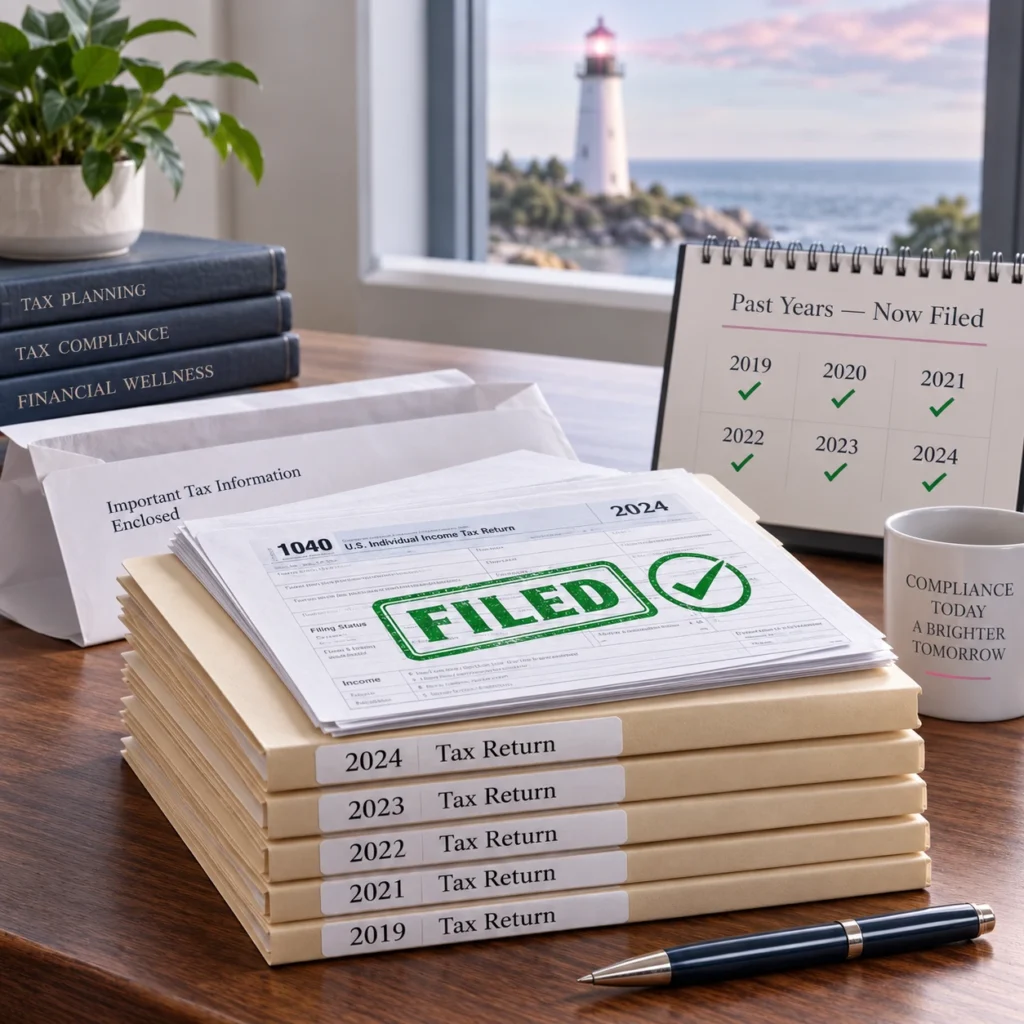
Filing back taxes can feel overwhelming, especially when several years are missing or the IRS has started sending notices. Pink Harbor, CPA can determine which returns must be filed, obtain available IRS records, prepare your past-due federal and state returns, and help you address any resulting tax balance.
You should generally file missing tax returns even if you cannot pay everything you owe. Filing the returns establishes the correct tax liability and is usually the first step toward rest
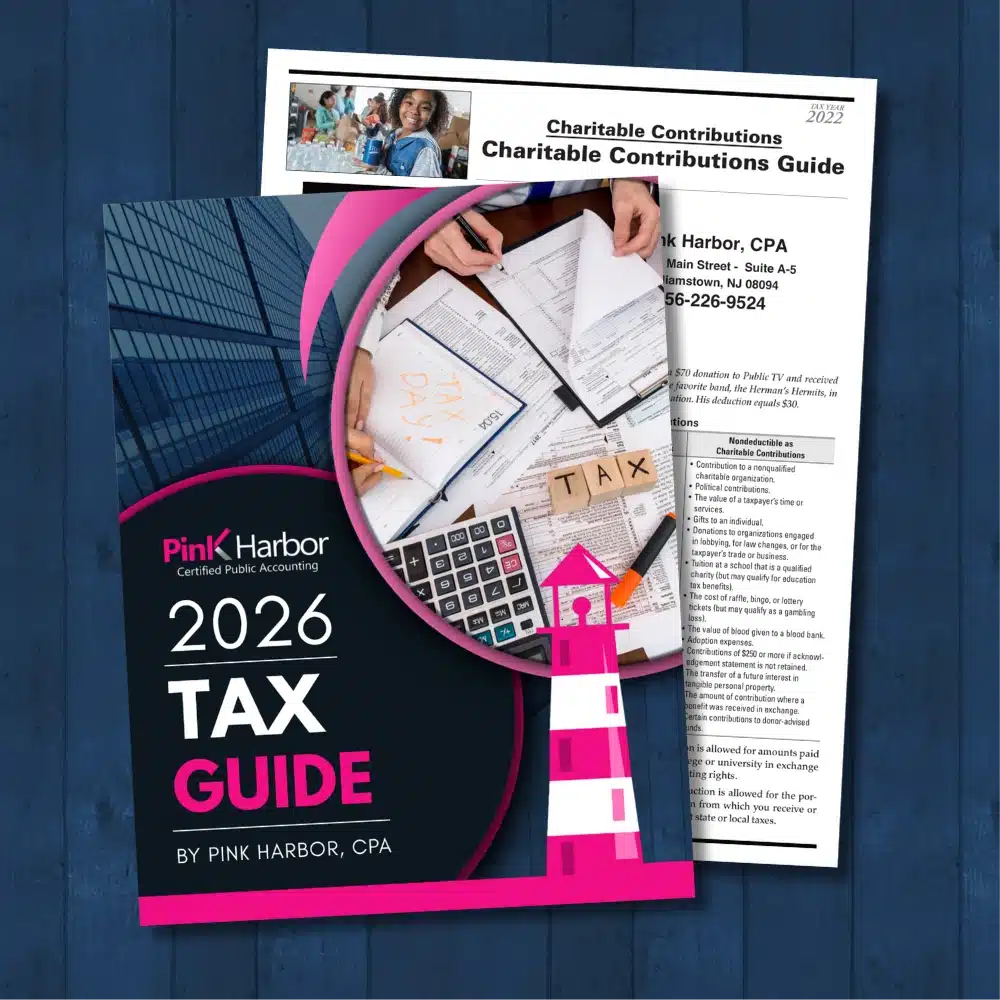
Explore comprehensive tax guides covering hundreds of topics from tax years 2021 through 2026. Designed for individuals, businesses, and nonprofits, these resources help you understand tax laws, deductions, credits, and planning opportunities—so you can make informed decisions with confidence.
Filing back taxes means preparing and submitting tax returns that were not filed by their original deadlines. These are also called unfiled, delinquent or past-due tax returns.
An unfiled return and an unpaid tax balance are different problems. You may have missing returns, unpaid taxes from previously filed returns or both.
Once the missing returns are filed, any resulting tax, penalties and interest can be addressed through payment, an installment agreement, penalty relief or another appropriate tax-resolution option.
Pink Harbor, CPA can help you complete the filing process and return to tax compliance.
Identify the Missing Returns: We determine which federal and state tax returns must be filed.
Obtain IRS Records: IRS transcripts may provide missing W-2s, 1099s and other reported income information.
Reconstruct Missing Information: Bank statements, business records and other documents may help fill gaps in the available IRS records.
Prepare the Past-Due Returns: Each return is prepared using the forms and tax laws that applied to that particular year.
File the Returns Correctly: Eligible returns may be filed electronically, while older returns may need to be signed and mailed to the proper IRS address.
Address the Tax Balance: After the returns establish the correct balance, we can evaluate payment arrangements and other tax-resolution options.
You can often begin filing back taxes even when your original documents are missing. IRS wage and income transcripts may contain W-2s, 1099s and other information reported by employers, banks and financial institutions.
However, IRS transcripts may not show business expenses, property basis, charitable contributions, dependent information or complete state-tax records. Bank statements, credit-card statements, bookkeeping records and other reliable documents may be needed to reconstruct that information.
Pink Harbor, CPA can obtain available IRS transcripts, identify missing information and help determine what additional records are needed to prepare accurate returns.
The IRS uses several notices to contact taxpayers when its records indicate that a required return is missing. Not every taxpayer receives all five notices, and they do not necessarily arrive in this exact order.
CP59 — No Record of Your Tax Return: The IRS has no record that a required prior-year personal tax return was filed.
CP516 — Reminder to File Your Return: The IRS previously contacted you but still has no record of the requested return.
CP518 — Final Reminder to File: This is a final reminder that one or more required returns remain unfiled. The IRS may calculate the tax if you do not respond.
CP2566 — Proposed Tax for an Unfiled Return: The IRS calculated proposed tax, penalties and interest using income reported by employers, banks and other third parties.
CP3219N — Notice of Deficiency: Commonly called the 90-day letter, this notice proposes a tax assessment and generally gives you 90 days to petition the United States Tax Court.
The amount proposed by the IRS may not include every deduction, credit, expense or filing choice available to you. Filing an accurate original return may produce a different result.

Delaying filing back taxes can increase penalties and interest and may eventually lead to IRS enforcement. Taking action voluntarily usually gives you more control over the process.
Penalties and Interest: The IRS may charge failure-to-file and failure-to-pay penalties, plus interest on the unpaid balance.
Lost Tax Refunds: You generally have three years from the original return deadline to claim a refund. After that, the money may be lost.
IRS Substitute for Return: The IRS may calculate the tax using income reported by third parties without including all the deductions, expenses and credits you could claim.
Collection Action: After the IRS assesses a balance, it may pursue collection through tax liens, wage garnishments or bank levies.
Filing back taxes establishes the correct amount owed and allows you to evaluate payment arrangements or other tax-resolution options.
Lorem ipsum dolor sit amet, consectetur adipiscing elit. Ut elit tellus, luctus nec ullamcorper mattis, pulvinar dapibus leo.
You can generally submit an old tax return even if it is many years overdue. However, the deadline for claiming a refund is usually much shorter. The years the IRS requires will depend on your filing history and individual circumstances.
There is no simple limit preventing you from filing an older required return. Prior-year tax forms remain available for many years. Filing an old return, however, does not necessarily mean you can still claim a refund shown on that return.
The IRS generally uses a six-year enforcement guideline when determining whether a delinquent taxpayer has filed enough returns to become compliant. However, six years is not an automatic limit. The IRS may require older returns depending on the circumstances.
Some taxpayers may qualify for IRS Free File, Volunteer Income Tax Assistance or Tax Counseling for the Elderly. These programs may not handle older returns, business income, rental properties, missing documents or complicated tax problems.
A CPA, enrolled agent or tax attorney can help with filing back taxes. Someone with several missing years, incomplete records, business income or IRS notices should consider hiring a professional experienced in both preparing past-due returns and dealing with the IRS.
Yes. Failing to file required returns can result in penalties, interest, lost refunds, refund holds and IRS-prepared substitute returns. Continued or willful noncompliance can lead to more serious enforcement, although not every late filer faces criminal prosecution.
The federal failure-to-file penalty is generally 5% of the unpaid tax for each month or partial month the return is late, up to 25%. Other rules, minimum penalties and interest may also apply.
Some recent prior-year returns may be filed electronically through a tax professional whose software supports them. Older returns generally must be printed, signed and mailed. Electronic-filing availability depends on the tax year and current IRS rules.
File the missing returns even if you cannot pay the entire balance. Filing establishes the correct amount owed and stops the failure-to-file penalty from continuing to increase. You can then evaluate payment arrangements or other IRS resolution options.
The IRS can prepare a Substitute for Return when you fail to file. This calculation may not include all the deductions, expenses and credits you could claim. You may still file your own accurate return after the IRS prepares a substitute return.
Tax compliance generally means filing all required returns, accurately reporting income and paying taxes when due or addressing an outstanding balance. Filing compliance and payment compliance are related, but they are not the same thing.
Pink Harbor, CPA offers a variety of IRS tax resolution services designed to help you manage and resolve tax issues.
Below are some of the most effective solutions available:
| IRS Offer-in-Compromise | Settle your tax debt for less than the full amount owed, based on your financial situation. |
| IRS Installment Plans | Spread out your tax payments over time with an installment agreement, making it easier to pay off your debt. |
| Filing Back Taxes – Tax Compliance | Settle your tax debt for less than the full amount owed, based on your financial situation. |
| IRS Innocent Spouse Relief | Avoid liability for tax debt if your spouse is solely responsible for incorrect or fraudulent reporting. |
| IRS Injured Spouse Relief | Reclaim your share of a tax refund that was applied to your spouse’s past debts, such as child support or student loans. |
| IRS Penalty & Interest Abatement | Reduce or eliminate IRS penalties and interest if you can prove reasonable cause for late payments or filings. |
| IRS Currently Not Collectible Status | Temporarily delay IRS collection activities if you are unable to pay your tax debt due to financial hardship. |
Pink Harbor, CPA provides expert help to resolve a wide range of tax issues. Some of the most common problems we can assist with include:
| IRS Audit Representation | Get professional representation during an IRS audit to ensure your rights are protected and you receive fair treatment. |
| IRS Lien Removal | Remove a tax lien placed on your property and restore your financial standing with the IRS. |
| IRS Levy Release | Stop the IRS from seizing your assets, such as bank accounts or wages, to pay off tax debt. |
| IRS Wage Garnishment Release | Protect your paycheck by stopping or reducing wage garnishment by the IRS. |
| IRS Trust Fund Recovery Relief | Resolve tax issues related to unpaid payroll taxes or trust fund penalties, often incurred by business owners. |
Magna feugiat morbi ullamcorper phasellus dis nisl netus accumsan fringilla sed gravida, eleifend mollis convallis nibh hendrerit.
✓ In-Person Tax Preparation
✓ Virtual Tax Preparation
✓ In-Person Tax Resolution
✓ Virtual Tax Preparation